From Classroom to Innovation: My Journey with DigiSchool and Smart Classroom
My experience with the Morocco DigiSchool competition was not merely a pedagogical supervision task; it was a true learning journey. This journey began at Abdelkhalek Torres School in the Taourirt Directorate – Oriental Region, when the Morocco DigiSchool caravan arrived at the institution.
It was there that the first sparks of thinking and innovation were ignited. I supervised a group of students who, from the very beginning, demonstrated great enthusiasm and a strong desire to create. Over time, the idea evolved into a project we named SMART CLASSROOM, and later into a competitive experience that culminated in winning first place at the regional hackathon of the Oriental Region and qualifying for the national competition.
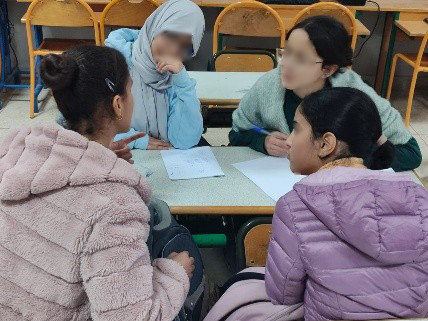
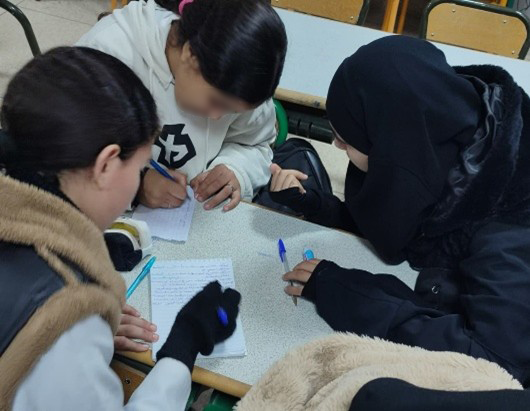
However, the most significant milestone came during the national bootcamp, where the project evolved from a local idea into a national vision. At that stage, the experience deepened in terms of conceptual development, teamwork, and openness to diverse ideas and experiences from different regions of Morocco.
Throughout this journey, it was not only the students who were learning—I was learning as well. I discovered new mentoring approaches based on trust, motivation, and empowering students to actively participate in building solutions.
Unlike many eady-made technological solutions, the SMART CLASSROOM project emerged from a precise field observation of the classroom reality. We noticed that several factors directly affect students’ concentration and engagement, such as air quality inside the classroom, noise and movement levels, and the nature of the learning moment.
The SMART CLASSROOM project is an integrated intelligent system that combines the Internet of Things (IoT) and Artificial Intelligence to improve the classroom environment and enhance learning quality in a practical and precise way. The system is based on a central unit (ESP32) connected to a set of sensors that measure, in real time, several key indicators inside the classroom, including noise and movement levels, as well as carbon dioxide (CO2) concentration.
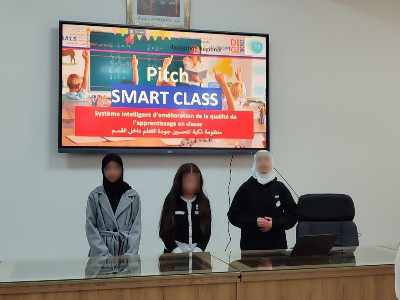
These data are instantly displayed on a device installed in the classroom and are also transmitted to a digital platform (dashboard) dedicated to the teacher. This platform allows real-time monitoring of classroom conditions, even remotely in case of unexpected absence, enabling timely and appropriate interventions and ensuring continuous pedagogical follow-up.
The system goes beyond simple data display; it leverages artificial intelligence techniques to analyze accumulated data and generate precise statistics for each class. This enables teachers to better understand behavioral patterns within the classroom and make informed pedagogical decisions based on objective data, whether for immediate interventions or follow-up actions such as encouragement or assessment.
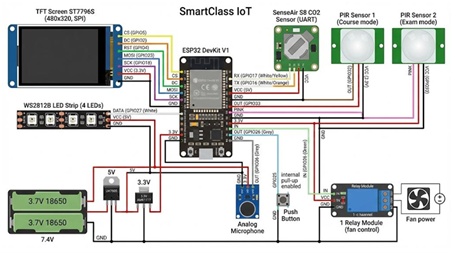
One of the most notable smart features of the project is the automated ventilation system linked to the CO2 sensor. When CO2 levels rise, a visual alert is triggered through a red LED, and two fans installed in the classroom are automatically activated: one to bring in fresh air and the other to expel stale air. This contributes to improving air quality and enhancing the learning environment. The fans can also be manually controlled via the application.
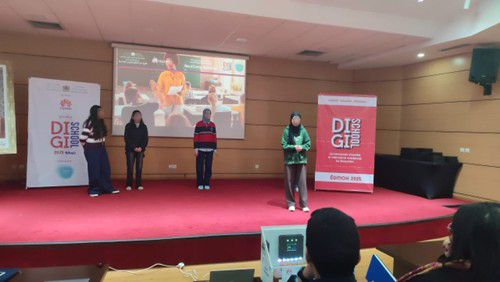
The “Sila” project addresses school dropout by strengthening early and structured communication between teachers and parents. It uses a QR code attached to the student’s notebook, allowing both teachers and parents to access a simple and user-friendly digital platform. This platform enables real-time tracking of academic and behavioral indicators while encouraging positive interaction, making technology a human-centered tool that enhances the educational relationship and serves as an effective bridge between families and schools.
The DigiSchool program stands as a pioneering model for integrating Information and Communication Technologies (ICT) into the educational system. It goes beyond transferring technical knowledge to fostering a culture of innovation and active learning within schools. Through this program, students shift from passive recipients of knowledge to active creators of solutions, while teachers evolve from knowledge transmitters to mentors guiding the creative process.
Our personal experience with DigiSchool was transformative. It enabled us to discover new ways of integrating technology into the classroom—not as an end in itself, but as a means to improve learning quality and enhance student engagement. It also contributed to developing essential skills such as teamwork, critical thinking, and problem-solving, highlighting the central role of ICT in building a modern school capable of meeting present and future challenges.
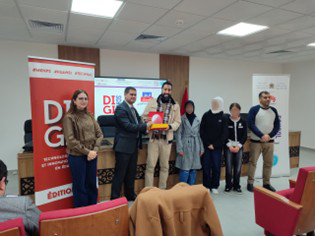
Together, these two experiences embody the concept of “Technology for Good,” where technology is used to support learning and improve the classroom environment. The project also falls into social innovation, as it stems from real needs within the school and aims to create a positive and sustainable impact.
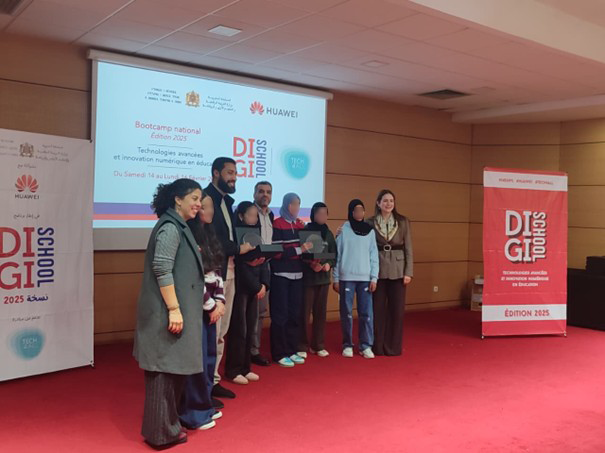
This experience has transformed our vision of education and taught us that innovation can begin in the classroom, and that when students are given trust, they can become true agents of change. Finally, we would like to express our sincere gratitude to the DigiSchool team for their continuous support and guidance. We also extend our heartfelt thanks to Huawei, represented by Ms. Fadoua Fadil, for their active commitment to supporting this educational initiative and for enabling both students and teachers to engage in an inspiring and exceptional learning experience.
About the author
Adnane Ismaili, Computer Science Teacher, Abdelkhaleq Torres Middle School, Taourirt, Oriental Region

Read part 1 in this series from Youssef Amkrane, Computer Science Teacher, Al Amira Lala Khadija Middle School, Daraa Tafilalet, Morocco: Teacher Perspectives: The Morocco DigiSchool Journey
Further Reading
Disclaimer: Any views and/or opinions expressed in this post by individual authors or contributors are their personal views and/or opinions and do not necessarily reflect the views and/or opinions of Huawei Technologies.
Leave a Comment